
Diamond Anatomy and Parts of a Diamond | Peoples Jewellers
Diamond Anatomy
While each diamond is unique, once cut and polished, all diamonds possess a shared set of common characteristics, generally referred to as the diamond anatomy. The individual proportions, angles and placement of these characteristics will vary for diamonds of different shapes and sizes; however, their basic definitions are the same. Learning more about the general structure of a diamond can help you navigate your options and understand what you’re looking for, whether you’re shopping for an engagement ring or another piece of diamond jewellery.
The Structure of Diamonds
It’s a diamond cutter’s job to turn a rough diamond into a gemstone that maximizes sparkle and brilliance. To do that, they must take each cut and angle into consideration. No matter the shape of a diamond, every diamond is made up of these characteristics.
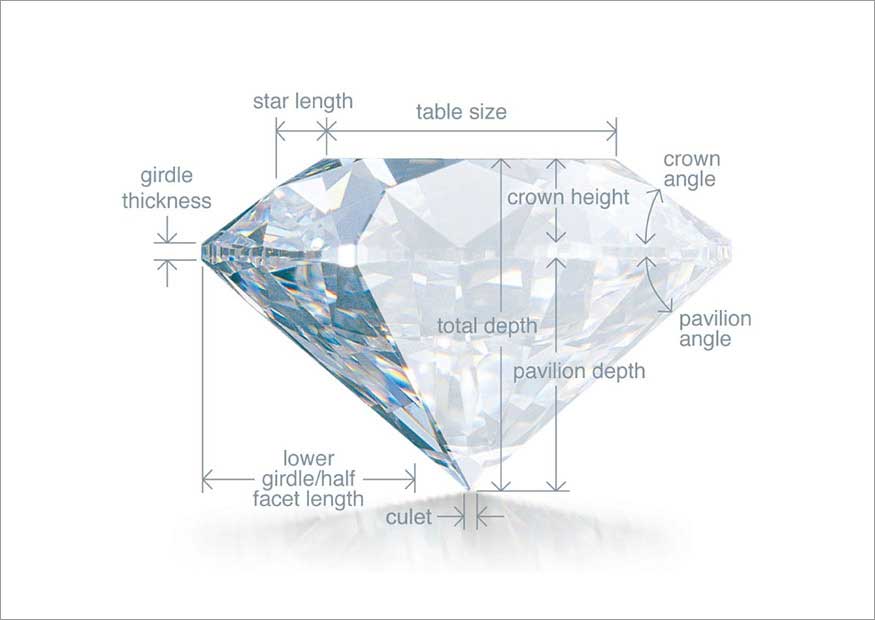
Facet: The smooth, flat surface cuts of a diamond are called facets. The placement of the facets determines the cut of the diamond. Most diamonds are either brilliant cut with triangular or kite-shaped facets, or step cuts, which have facets that run parallel to each other like an Assher or emerald cut. The quality of the diamond facets directly impacts the cut grade and therefore the value of a finished diamond.
Table: The top horizontal facet of a diamond that can be viewed from above when the stone is face up. In all diamond cuts, the table is the largest facet. Its purpose is to allow light to enter the diamond and reflect from the pavilion.
Crown: The upper portion of the diamond, measured from the top edge of the girdle up to the table. The brilliance of a diamond begins as the light enters the table and passes through the crown. The crown angle is generally between 32 and 36 degrees and can have a noticeable impact on the appearance of the diamond.
Girdle/Girdle Thickness: The middle portion of the diamond at the intersection of the crown and pavilion is the widest part of the stone. The girdle thickness impacts both the appearance and the strength of the stone. It will also be part of the diamond that fits into the setting, holding the stone in place.
Pavilion: The bottom portion of a diamond that extends from the girdle down to the culet. Usually a noticeable “V” shape, the pavilion is cut to reflect light back out through the crown.
Culet: A tiny facet cut at the tip of a gemstone to prevent the diamond from splitting or chipping. Not all diamonds have a culet cut, but if they do, it should be very small and hardly noticeable.
Depth: Diamond depth is the same as the height of a gemstone as measured from the bottom of the culet to the top of the table. It will be expressed as a percentage measured by the diamond’s depth divided by the width. Depth impacts how light reflects off all the facets within the stone.
Facet: The smooth, flat surface cuts of a diamond are called facets. The placement of the facets determines the cut of the diamond. Most diamonds are either brilliant cut with triangular or kite-shaped facets, or step cuts, which have facets that run parallel to each other like an Assher or emerald cut. The quality of the diamond facets directly impacts the cut grade and therefore the value of a finished diamond.
Table: The top horizontal facet of a diamond that can be viewed from above when the stone is face up. In all diamond cuts, the table is the largest facet. Its purpose is to allow light to enter the diamond and reflect from the pavilion.
Crown: The upper portion of the diamond, measured from the top edge of the girdle up to the table. The brilliance of a diamond begins as the light enters the table and passes through the crown. The crown angle is generally between 32 and 36 degrees and can have a noticeable impact on the appearance of the diamond.
Girdle/Girdle Thickness: The middle portion of the diamond at the intersection of the crown and pavilion is the widest part of the stone. The girdle thickness impacts both the appearance and the strength of the stone. It will also be part of the diamond that fits into the setting, holding the stone in place.
Pavilion: The bottom portion of a diamond that extends from the girdle down to the culet. Usually a noticeable “V” shape, the pavilion is cut to reflect light back out through the crown.
Culet: A tiny facet cut at the tip of a gemstone to prevent the diamond from splitting or chipping. Not all diamonds have a culet cut, but if they do, it should be very small and hardly noticeable.
Depth: Diamond depth is the same as the height of a gemstone as measured from the bottom of the culet to the top of the table. It will be expressed as a percentage measured by the diamond’s depth divided by the width. Depth impacts how light reflects off all the facets within the stone.